The Essential Legal & Verification Checklist for Land Buyers
Demystifying Patta, DTCP, and RERA certifications. Learn how navigating proper documentation transforms land acquisition into a safe, secure, and confident real estate decision.

Investing in raw land or structural plots offers unmatched long-term financial scaling. However, unlike purchasing paper assets or corporate shares, land ownership is permanently bound to local regulatory frameworks, historical records, and municipal boundaries.
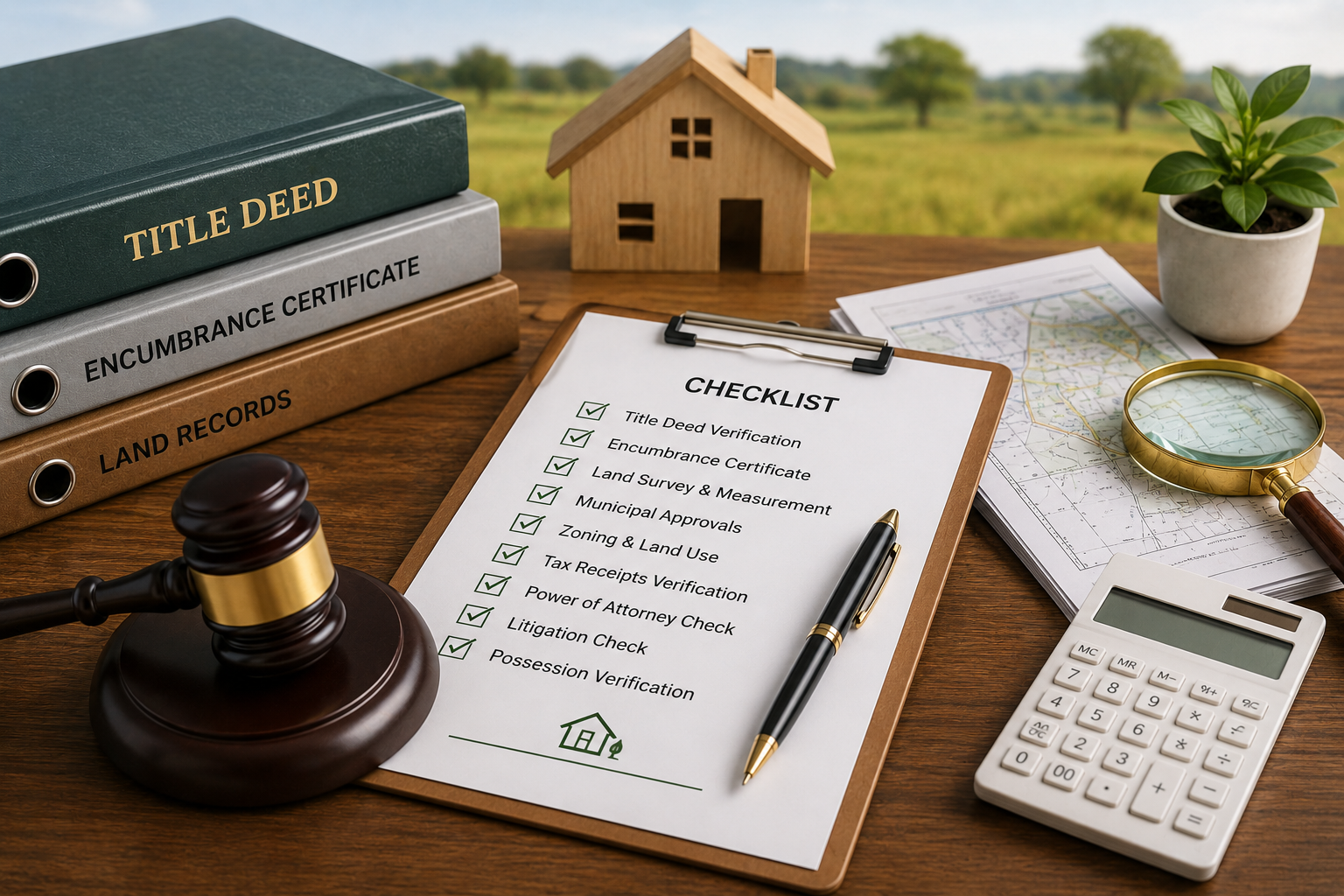
Skipping vital due diligence can turn an incredibly promising real estate opportunity into an exhausting legal complication. To make sure your transaction is secure, clean, and perfectly verified, we have assembled the definitive documentation checklist that every plot investor must review before executing a final sale agreement.
1. Verification of the Root Title Deed
The foundational step of land buying is confirming ownership legitimacy. A **Title Deed** is the core document that traces the historical line of property owners. It is highly recommended to inspect and audit these source documents spanning back at least 30 years.
This process ensures that the current seller holds absolute ownership without any legal challenges from surviving family members or prior corporate buyers. Always match the structural land dimensions recorded in the title papers with real-world physical boundaries.
2. Securing a Clean Encumbrance Certificate (EC)
An **Encumbrance Certificate (EC)** acts as a comprehensive historical record of financial activity for a plot of land. It shows whether the property has been pledged as collateral for bank loans, caught up in local litigation, or subject to active claims.
A clean, untainted EC proves that the property is completely free from outstanding debts or unresolved court orders. Ensure your legal representative requests an EC covering a continuous multi-decade timeline up to the current week of closing.
3. Decoding Local Regulatory Approvals: DTCP & RERA
Buying a plot without the right government approvals can limit your ability to build residential or commercial structures in the future. Depending on your location, layouts must be approved by organizations like the **DTCP (Directorate of Town and Country Planning)** or local metropolitan development authorities.
Additionally, if your community layout spans beyond standard regulatory sizing thresholds, it must be registered under **RERA (Real Estate Regulatory Authority)**. A RERA-registered project gives you total transparency regarding completion schedules, layout designs, and consumer legal protections.
The Buyer's Verification Matrix
Here is a quick look at the core documents you need to verify, along with what they protect you against:
| Core Document | Primary Purpose | Protects Against |
|---|---|---|
| Title Deed / Parent Documents | Establishes legal chain of property ownership | Fraudulent sales and historical title disputes |
| Encumbrance Certificate (EC) | Tracks financial history and active liens | Unrevealed property mortgages and bank debts |
| Patta / Khata Document | Proves registration in government revenue files | Wrongful property classification and tax problems |
| DTCP / RERA Approvals | Confirms layout design and building rights | Demolition orders and unapproved community layouts |
4. Confirming Patta / Khata Revenue Registration
While a Title Deed acts as a private contract between a buyer and a seller, the **Patta** (or Khata, depending on your region) is the official record in government revenue files. It shows who is registered as the taxpayer for that specific parcel of land.
Once a land transaction is completed, the Patta must be updated to your name at the local sub-registrar office. This step gives you absolute proof of ownership against any unauthorized claims or boundary issues.
"Pre-verified legal framework is the difference between an asset that builds multi-generational wealth and one that causes years of frustration."
— VIP Properties Risk Management Team5. Verifying Master Plan Zoning Alignments
Before closing your transaction, check the regional government's **Master Plan** for the city or town. This helps ensure that the land you are looking at is officially zoned for residential or commercial use.
If a parcel is mistakenly classified under agricultural protection, agricultural conversion certificates are required before any building can begin. Checking these details ahead of time protects your investment from future zoning issues.